The Essl Foundation supports inclusive art projects and, with the Zero Project, is searching worldwide for innovations that enable people with disabilities to create and experience art.
The Essl Foundation MGE, a non-profit private foundation, was founded in 2007 by Martin and Gerda Essl and their children to support people in need, with a particular focus on people with disabilities. In 2008, the Essl Foundation launched the Zero Project, which has become the foundation's most important program in recent years.
The Zero Project's mission is to create a world without barriers (with zero barriers), where people with and without disabilities can live together as equals. Art plays a central role in this. According to Martin Essl, "Inclusive art and culture promotes vibrant, inclusive communities of people with and without disabilities, independent living, and encourages entrepreneurial initiative."
Inclusion as a global mission
The Zero Project is therefore strongly committed to removing barriers that prevent people with disabilities from accessing the arts, starting with the accessibility of buildings and information, through education and training, to employment opportunities in this field.
The Zero Project thus contributes to the implementation of the goals of the UN Convention on the Rights of Persons with Disabilities, which guarantees equal opportunities in society for all people, regardless of disability. This convention has been ratified by over 180 countries since 2007. To support this goal, the Zero Project has developed a unique methodology based on three pillars:
• Finding and selecting exemplary solutions based on the three criteria of innovation, impact and scalability;
• Organising a global, diverse network of thousands of people with and without disabilities to develop these solutions;
• Dissemination and support of these solutions.
The Zero Project's work focuses on four key themes: education, employment, accessibility, independent living, and political participation. Each year, a global research and communications program is implemented in one of these areas. In addition, technology and art are featured in the annual global nomination calls.
World's largest platform for inclusion
More than 900 innovative solutions from around 150 countries have already been selected, processed, and supported from the submissions. More than 10,000 experts with and without disabilities, organizations, and companies from all over the world participated. These initiatives were and are presented at the Zero Project Conference, which takes place annually in spring in the UNO City in Vienna and is regularly attended by around 1,500 people with and without disabilities from 100 countries. The three-day meeting serves as an opportunity for networking with other participants and mutual knowledge transfer. The kick-off event has been held in the plenary hall of the Austrian Parliament for several years. The Zero Project Conference is also accessible online and is supported by a variety of accessibility measures.
Ideas to imitate
Numerous solutions honored at the Zero Project Conference focus on art and art education. In 2018, the Museum of Modern Art (MoMa) in New York was honored for its "Access Programs," which offer thousands of people with various disabilities the opportunity to experience art each year.
In 2020, one of the awardees was the ARCHES ("Accessible Resources for Cultural Heritage EcoSystems") project. Twelve European partners from the fields of culture—including six leading museums—technology and science, as well as people with disabilities, participated in the project. The project was designed to jointly develop and implement solutions to improve the accessibility of cultural institutions and enable people with various disabilities to experience art independently. The Austrian Kunsthistorisches Museum (KHM), itself an internationally recognized pioneer in inclusive art education, participated in ARCHES.
Inclusive creativity
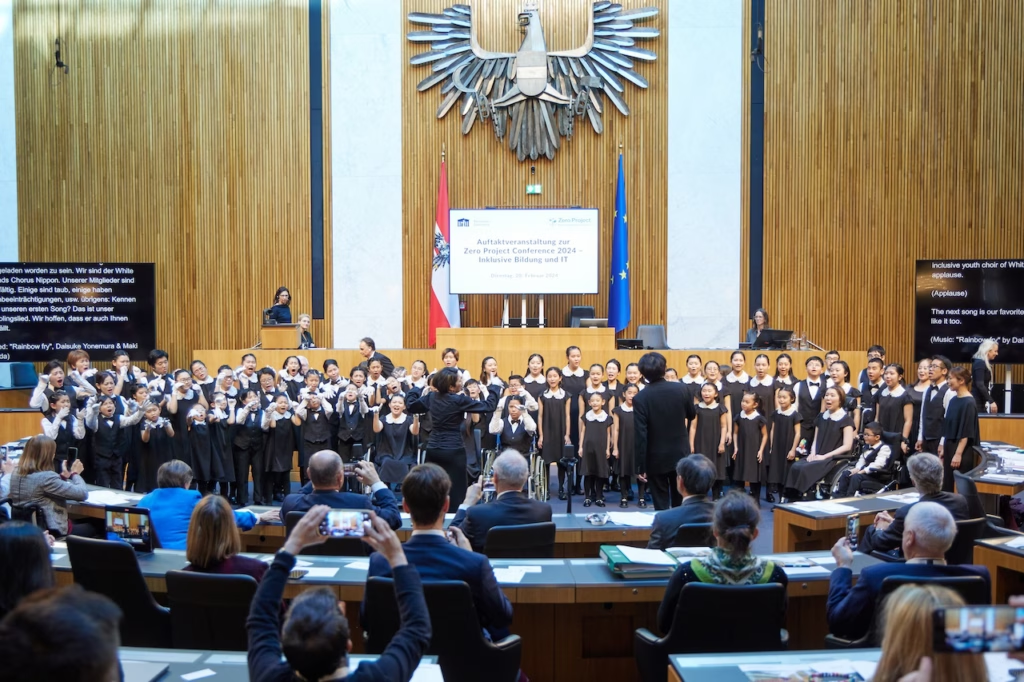
People with disabilities are also creative themselves. One inclusive art project is the White Hand Chorus Nippon from Japan. The choir consists of children with and without disabilities who perform music with their voices, their hands, and their facial expressions through sign language. In 2024, the inclusive music project not only received an award, but the White Hand Chorus also performed several times in Austria, including at the opening of the Zero Project Conference in the plenary hall of the Austrian Parliament.