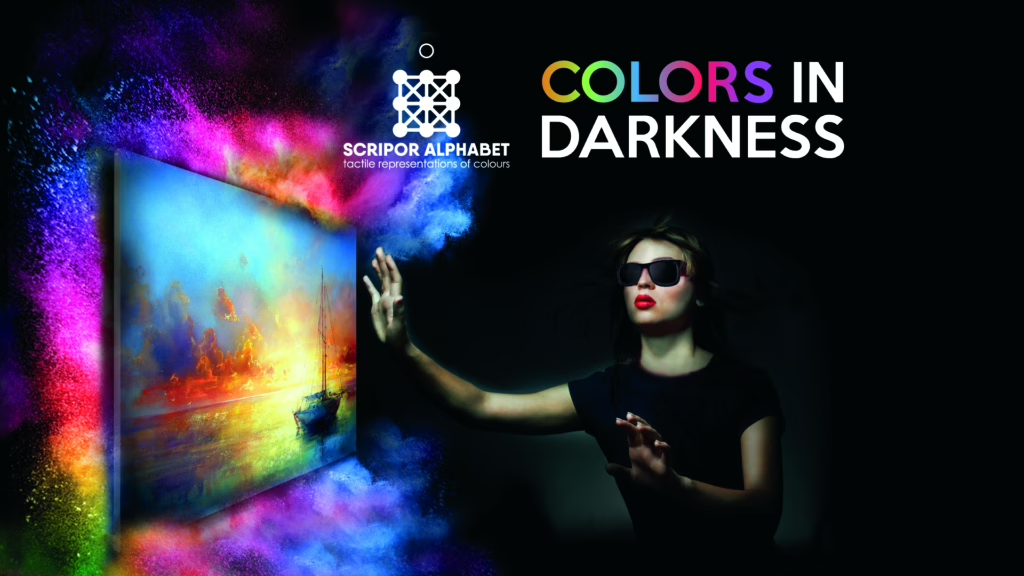
A Zero Project Awardee from Romania shows how innovation and standardization can break down barriers for blind and visually impaired people and make colors tangible.
The Scripor Alphabet, developed in 2018 by the Scripor Alphabet Association in Cluj, Romania, is the first standardized way to represent colors in Braille. Using just one touch cell system, ten colors in light and dark shades can be distinguished. Used on packaging, in museums, or in fashion and sporting goods, it makes everyday life and cultural participation more inclusive for blind, visually impaired, and colorblind people.
The impact is multifaceted: Over 1,000 manuals have been distributed and more than 150 workshops have been conducted worldwide. Furthermore, the alphabet is part of the curricula at seven Romanian special schools for blind children. It also opens new doors in the cultural sphere: works of art, libraries, and even wine labels can be made tactile.
Three aspects make the project special:
• Standardization of colors: For the first time, there is an internationally applicable tactile solution for color discrimination.
• Practical application in everyday life: From supermarket shelves to museums – the alphabet creates immediate added value.
• Growth through partnerships: Supported by companies such as Hidroelectrica SA and Banca Transylvania and awarded with international prizes such as the Gold Medal at the Salon International des Inventions in Geneva 2019, the network is constantly growing.
This project shows how creativity, standardization and collaboration can open up new dimensions of inclusion.
More information can be found here.