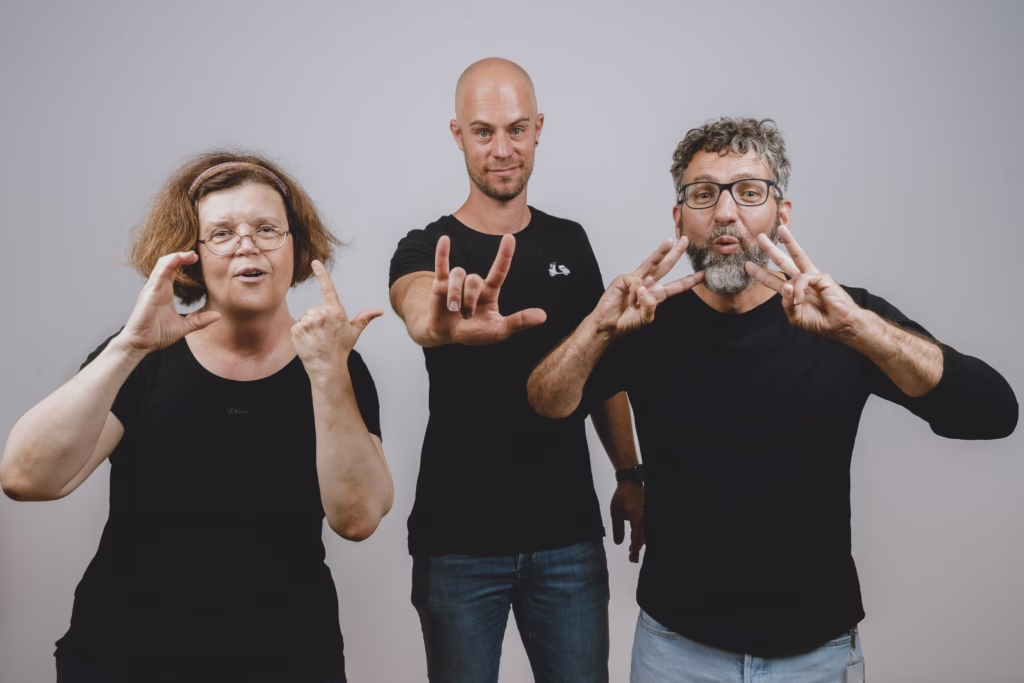
On September 1st, 20 years ago, Austrian Sign Language (ÖGS) was officially incorporated into the constitution, thus making a significant contribution to the equality of deaf people in our society.
We've taken a look around our museum community: of the more than 160 museums inclusively represented in our MuseumsGuide, 50 offer information and instruction in sign language. These are easy to find: On our website, you can search for museums using filter terms, for example, under "Offerings in ÖGS."
Did you also know that Austrian Sign Language is on the list of intangible cultural heritage in Austria?
Whether oral traditions, performing arts, social rituals and festivals, knowledge of nature, handicrafts, or even the ÖGS (Organic Heritage) – intangible cultural heritage is sustained by human knowledge and passed on from one generation to the next. Intangible cultural heritage shapes social coexistence and makes an important contribution to the sustainable development of societies.
The UNESCO Convention for the Safeguarding of the Intangible Cultural Heritage (2003) established the inventory and visibility of the intangible cultural heritage of each country through national inventories. The Austrian Inventory of Intangible Cultural Heritage has been collecting and documenting these diverse practices since the ratification of this international treaty in 2009.
The Austrian Sign Language Association (ÖGS) forms the social and cultural foundation of the Austrian Sign Language community. It is the native language of deaf people in Austria and thus an essential part of their identity. It is used throughout Austria and includes dialects characterized by regional specificities. There are 1,865 institutionalized deaf associations in Austria that are committed to preserving the ÖGS.
The first school for the deaf was founded in Vienna in 1779. Since then, the language has been cultivated and passed on in appropriate schools, clubs, and families.
Currently, the Austrian Deaf Association (ÖGLB) with academic institutions to standardize and safeguard the ÖGS language policy. Further measures to raise awareness and ensure the dissemination of ÖGS include lobbying for bilingual and bicultural inclusive education in schools for the deaf and the mainstream school system, as well as increased training for children of deaf parents for the interpreting profession.
The educational offerings in museums for deaf or hearing-impaired people not only enable these people to participate in cultural activities, but also make an important contribution to the continuation of the ÖGS in the sense of intangible cultural heritage.