
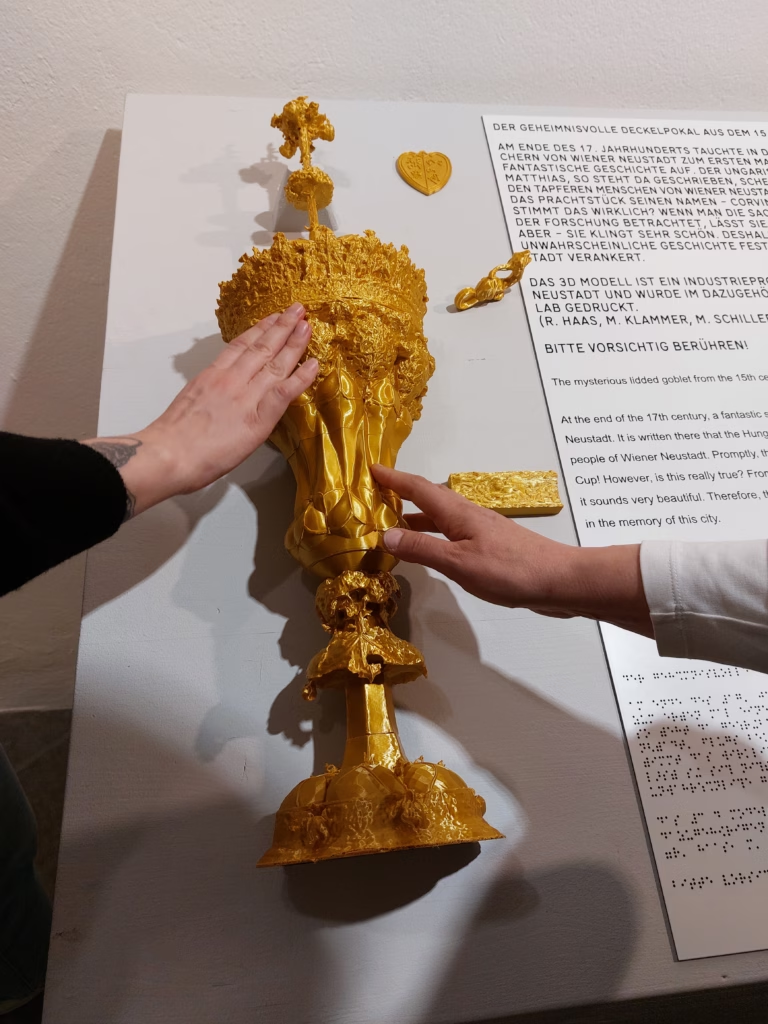
How can accessibility be implemented in a diverse museum landscape that is largely supported by volunteers? A look at Lower Austria shows that, in addition to structural measures, information, training, and digital offerings can be important building blocks for greater participation. The Museums Management of Lower Austria supports and advises more than 750 museums, collections, and memorial sites in the province. Around 15,000 volunteers support these institutions and thus make a significant contribution to preserving cultural heritage. To assist them with questions regarding accessibility and inclusion, numerous services, information, and training opportunities are available.
Knowledge, networking and digital access An important approach is the provision of knowledge and practical assistance. Website of the Museum Management of Lower Austria Museums can find numerous materials on accessibility and inclusion, including general guidelines as well as information on plain language and digital accessibility. These documents facilitate getting started with the topic and support museums in developing suitable measures for their own specific circumstances.
Continuing education also plays a central role. Formats such as the Online Museum Wednesday, Regional Museum Meetings or the Lower Austrian Museum Day They promote professional exchange and offer opportunities to share experiences. Furthermore, the comprehensive course program regularly offers advanced training on accessibility and inclusion. These opportunities are open to everyone interested in museum topics, regardless of profession or place of residence.
Digitization also makes a significant contribution to the accessibility of cultural heritage today. DIP catalog It enables the digital recording and presentation of collection objects. Currently, more than 50,000 objects with photos and descriptions are already accessible online.

Thanks to digital networking, these objects – and thus the collections from which they originate – are also available in the Cultural pool, the central search portal for digitized cultural heritage from Austrian museums, archives and libraries, as well as in the Europeana, The virtual library for European cultural heritage presents [the following]. This allows interested parties to access collections regardless of opening hours or distance. Researchers and culturally interested visitors alike gain additional opportunities to discover cultural heritage.
Discover museums and plan excursions
Numerous practical resources are also available for museum visitors. The online directory includes more than 400 museums, 150 galleries and exhibition venues, 150 publicly accessible private collections, and over 100 educational trails, themed routes, and memorials throughout Lower Austria. Users can specifically search for various forms of accessibility and barrier-free services. This includes information on accessible websites, tactile elements within museums, and texts in Braille. This information is supplemented by details on accessibility, parking, stroller suitability, educational programs, interactive exhibits, and information in other languages.
Those planning a museum visit can also find cultural education programs for all age groups online, as well as information on current exhibitions and events. This allows for targeted research of suitable activities and the planning of excursions in advance according to individual interests and needs.
For those who prefer to use information in printed form, several brochures are available:
🔹 „Museums and exhibitions in Lower Austria“This publication lists museums, collections, exhibition venues, memorials, themed trails, and educational paths in Lower Austria and the adjacent regions of the Czech Republic and Slovakia. It includes contact information, opening hours, and details of special exhibitions.
🔹 „Cultural mediation“ brings together thematically organized educational programs for children and young people in Lower Austrian museums.
🔹 „discover AREAacz“This brochure presents educational programs for teenagers and young adults in museums in the Lower Austrian-Czech border region. The brochure is bilingual, written in German and Czech, as is the accompanying illustration.” Poster booklet. The interactive map It presents the region's museums and cultural institutions online and scores points with English keywords and theme-related icons. – This reduces language barriers and gives even more visitors access to this culturally rich area worth discovering.


All brochures can be obtained free of charge from the Museumsmanagement Niederösterreich (Museum Management Lower Austria). Please send an email to office@noemuseen.at That's enough.
This look at Lower Austria shows that accessibility and inclusion go far beyond structural measures. Knowledge transfer, networking, digital access, and the support of volunteers contribute significantly to making cultural heritage accessible to as many people as possible – for a shared experience!
Information about the services offered: www.noemuseen.at