
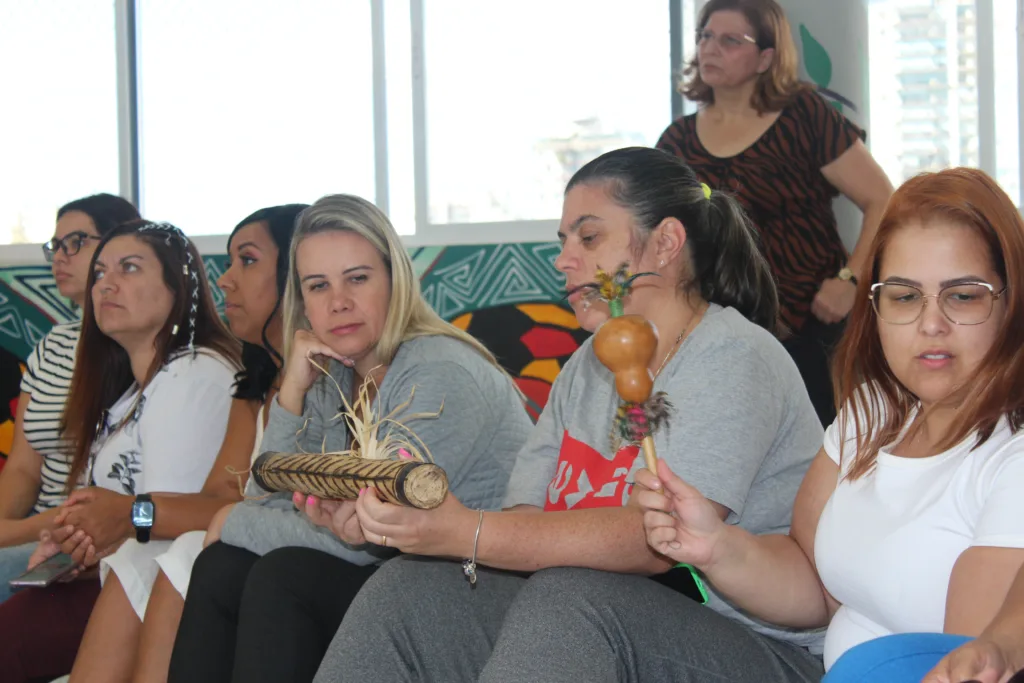
Mais Diferenças, based in São Paulo, Brazil, is an NGO dedicated to inclusion in education and culture. Through its Inclusive Education Laboratory, the organization has developed a specialized training methodology to support teachers in public schools in integrating art into their teaching practices, curricula, and classroom activities.
The program is aimed at teachers who work with students with and without disabilities, and sees art as an important tool for creating inclusive learning environments and promoting participation, communication and creative expression.
The Laboratory for Inclusive Education offers a 20-hour professional development course that introduces teachers to various artistic disciplines, including visual arts, film, music, theatre, and literature. Through practical workshops, shared experiences, and guided discussions, participants explore how artistic approaches can enrich educational practice and support diverse learning pathways.
Mais Diferenças has designed the laboratory as a multiplier model („train-the-trainer“) and provides teachers with practical methods and materials that they can take directly to their schools and share with colleagues.
One example of this approach is a workshop by visual artist Paulo Bordhin, who works with unconventional materials such as aluminum and telephone wires. By introducing teachers to his artistic techniques, he encourages them to experiment with tactile materials and develop creative activities that open up different avenues for students to learn, explore, and experience.
The program primarily reaches teachers in kindergartens and primary schools, of whom about 80 percent are women.
The laboratory is accredited by the Technical Training Center of the São Paulo Municipal Education Authority and integrated into the city's teacher training program. Its methods and educational materials are also published and disseminated through the Education Authority, creating broader access and opportunities for replication.
The program's impact is regularly evaluated. The evaluations show that artistic forms of expression and creative methods are used more frequently in the classroom, and teachers participate in cultural events more often. More than 90 percent of participants rated the course as excellent.
One teacher participating in the program reflected on its impact: „The most remarkable thing is how much art and culture foster a more respectful and richer perspective within us.“