
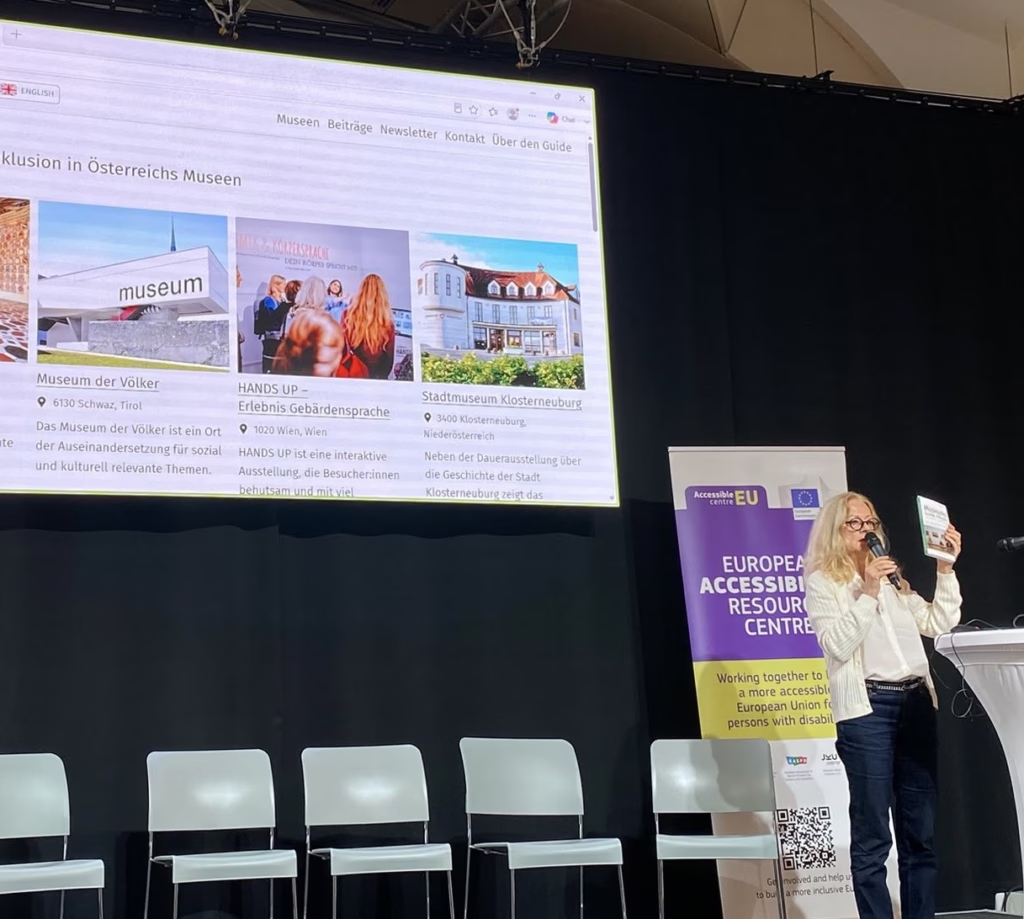
A full-day conference at the MuseumsQuartier Vienna on September 14, 2026, brought together a number of outstanding experts and developers to present and discuss best-practice examples of inclusive art education in museums.
The conference, organized by the Austrian Association for the Blind and Visually Impaired in cooperation with the MQ Vienna, took place within the framework of „AccessibleEU“.
Doris Rothauer presented the Museum guide included, who also received the WACA Gold Certificate for website accessibility on that day.
Elke Kellner, Managing Director of ICOM Austria, explained the new museum definition from ICOM, which emphasizes accessibility and inclusion as a central task of museums and thus sets an important milestone towards inclusion.
Jennie Schellenbacher from the Vienna Museum She spoke about the challenges museums face, ranging from the costs of providing accessible services and communication to raising staff awareness and acquiring specific know-how. Her initiative ARGE Inclusive Museum helps through knowledge transfer and exchange.
Theresa Rauter from the Dance Quarter Vienna and Michaela Höß from the Belvedere They presented concrete examples and formats of how diversity and inclusion are practiced in their institutions and what inclusive art education looks like in their offerings.
Christian Pomberer explained using the example of State Museums Joanneum in Graz, which internal hurdles his organization had to overcome in implementing inclusion as a cross-cutting theme across all departments and locations.
A panel on the topic of „Museum & Wellbeing“ brought together representatives from the Vorarlberg Museum, the Dom Museum and the Künstlerhaus Wien to exchange their experiences on how art education contributes to people's wellbeing. Kathrin Dünser from the Vorarlberg Museum She spoke about her experiences in the pilot project "Museum visit on prescription". Antonia Heigl from the Cathedral Museum and Julia Kornhäusl from the Artists' House, who each offer dementia-sensitive mediation formats, reported on the importance and necessity of cooperation in developing these services.
A demo zone and information booths presented the latest technological developments and training offers: the ÖZIV awareness trainings, the tactile and multimedia teaching tools of the VRVis Center for Virtual Reality & Visualization, the Hearonymus App, the Capito App, the Audio Description Next Level, and screen reader programs for websites.