
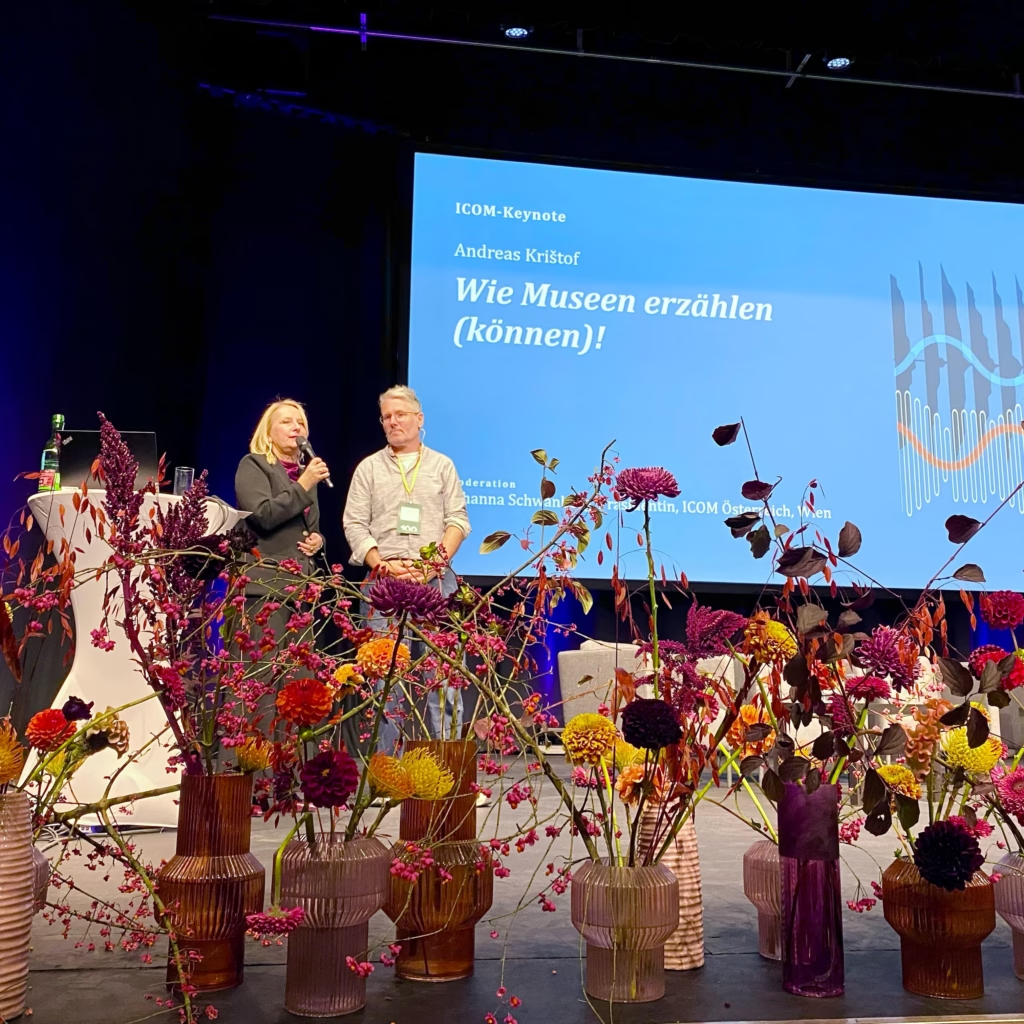
Over three days in mid-October, this year's Museum Day in Eisenstadt was dedicated to language in the broadest sense and thus also to (linguistic) accessibility to art and culture for all.
Objects carry language(s), voices, and narratives within them. Some things "speak" several languages simultaneously: They can cross borders, be transferred into new cultural and linguistic contexts, renamed, and reunderstood. In doing so, not only do the languages used change, but also the perspectives from which they are spoken about, as well as the stories associated with them. Their meanings shift, are superimposed, translated, or even erased.
In an exciting keynote address, exhibition curator Andreas Kristof spoke of polyphony not as a goal, but as a starting point for further debate.
Polyphony has become the guiding principle of the 21st-century museum. Hardly any institution today can do without the ambition of making diverse perspectives visible. But is it enough to gather as many voices as possible? Or is the fundamental question rather: who tells the story, who is heard, and who decides what happens?
The challenge lies not merely in incorporating new perspectives into existing narratives. Rather, it lies in rethinking the role of the museum itself. What happens when the museum doesn't relinquish its authority, but instead shares it with those whose stories are being told? How does an institution change when it no longer speaks exclusively about people, but empowers them to speak for themselves?
These were questions that ran throughout the entire program and enabled exciting discussions as well as new perspectives.
Since 1991, the Austrian Museum Day has focused on a different theme each year and is organized by the two associations ICOM Austria and the Austrian Museums Association. A different Austrian state and a local museum are chosen as the venue each year to reflect the diversity of the museum landscape in Austria.