
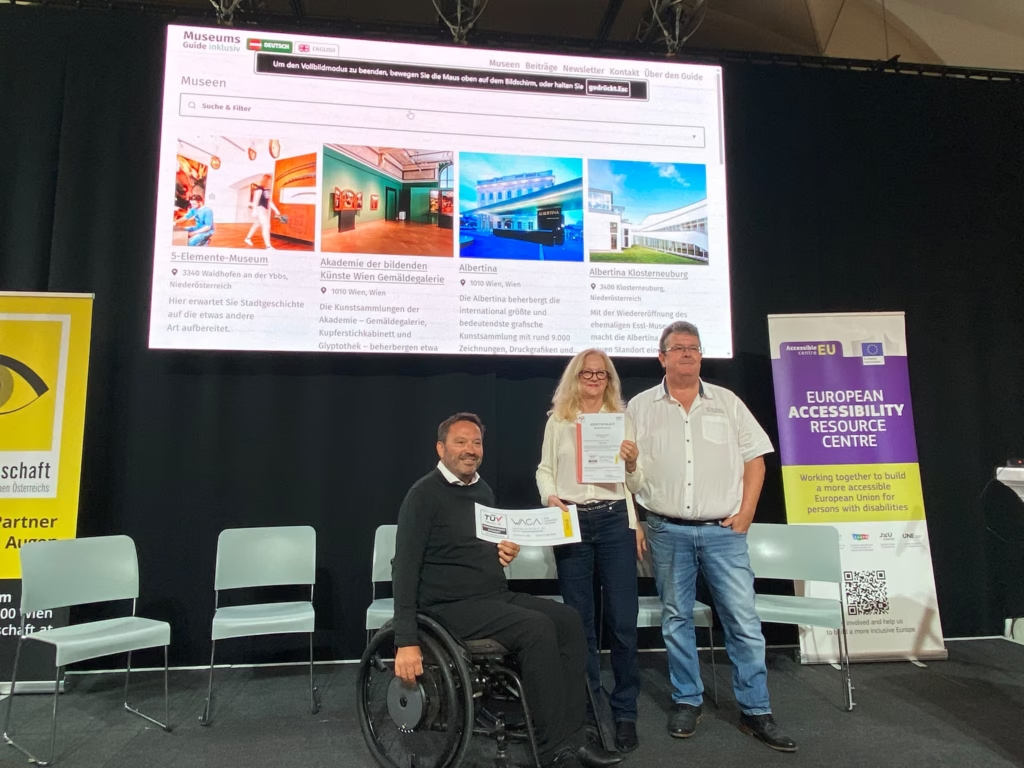
The MuseumsGuide inclusive has created an accessible website WACA Gold Certificate Received! The official presentation of the award took place during a symposium at the MuseumsQuartier in Vienna.
The certification was carried out by TÜV TRUST IT Austria GmbH as the certification body together with the WACA initiative.
Why the certification? Even in the cultural sector, it should now be standard practice to design accessible websites, because a visit to a cultural institution often begins with research on the internet, including on our website, the MuseumsGuide.
The EU has with the European Accessibility Act The EU-wide Accessibility Act (EAA) has introduced uniform accessibility requirements for certain digital products and services. In Germany, implementation is legally regulated by the Accessibility Strengthening Act (BFSG), and in Austria by the Accessibility Act (BaFG), which came into force in June 2025 and also applies in principle to cultural institutions and museums. Accordingly, digital offerings such as websites, apps, and other types of digital content must be designed so that everyone can use them.
What this means in concrete terms is explained in the WCAG guidelines (Web Content Accessibility GuidelinesHelpful are the internationally recognized guidelines for improving the accessibility of web content by 2025, developed by an independent group of experts. The parameters defined therein for the accessibility of digital content are:
- the perceptibility,
- usability,
- the comprehensibility,
- the robustness.
The robustness of a website ensures that it is compatible with different browsers and assistive technologies, which can be regularly checked against current web standards.
Usability should be ensured through clear and simple navigation. Strong contrasts between text and background, adjustable font sizes, and clear, understandable language improve perceptibility and comprehensibility.
Image captions should be so-called Alternative texts Alt text can be added to describe the image clearly and as simply as possible, so that screen readers or other assistive technologies can make the image understandable for people with various disabilities. Subtitles for videos and transcripts for audio content, in turn, help those with hearing impairments.
Know-how on digital accessibility is provided by, among others, Aid Association for the Blind and Visually Impaired Services range from awareness training to specific consulting and training courses, all the way to certification with the Web Accessibility Certificate WACA.