
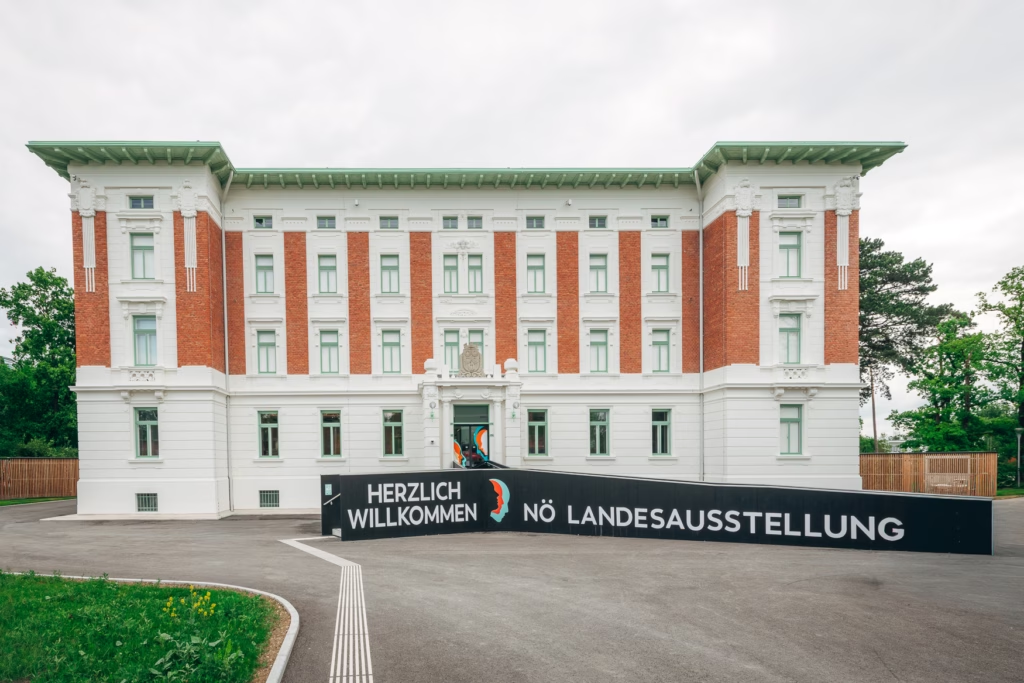
The Lower Austrian State Exhibition 2026 is on display at the Mauer State Hospital until November 8th, a place that has been synonymous with the treatment of mental illness in Lower Austria for 120 years. The exhibition, which presents mental health as a matter of public concern, is exceptional and well worth seeing in several respects.
For the first time, a state exhibition is being held in a state hospital, and this is taking place while the hospital remains fully operational. This aligns with the hospital's intention to provide open and transparent access. At the same time, this openness also requires sensitivity in dealing with this special place, the people who seek treatment and live there, and the staff.
The state exhibition presents mental health as a matter of concern for society as a whole. In this context, the exhibition aims to make a significant contribution to destigmatizing mental illness and reducing the stigma surrounding those affected and their families, as well as establishing the Mostviertel region as a health destination with a diverse range of cultural and health tourism offerings.
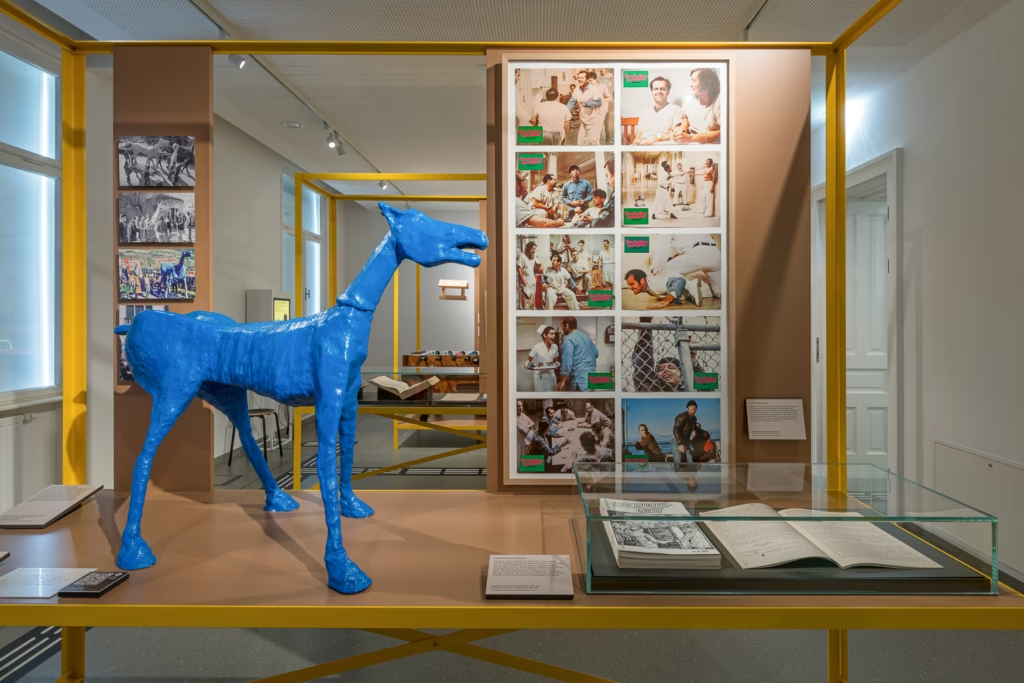
The centerpiece of the Lower Austrian State Exhibition is the main exhibition in House 21. Presented in four sections and 21 thematic positions, it focuses on how our society deals with mental illness over time and aims to provide impetus for the future. Each thematic position is illustrated by five to ten objects, each presenting an argument or representation to offer a multifaceted narrative.
To accommodate these diverse perspectives, the exhibition includes not only artworks but also historical objects and documents, as well as items belonging to those affected, their families, and medical personnel. The topics range from the search for the seat of the soul and differing perceptions of illness and health, to the establishment of psychiatric hospitals and nursing homes, the evolution of mental health treatment, the anti-psychiatry movement, and current mental health concerns.
In addition, a permanent learning center for the victims of Nazi medical crimes will be established in House 18 as part of the state exhibition.
The state exhibition is accompanied by an extensive program on accessibility and inclusion:
Inclusive exhibition concept – House 21
The accessible concept for House 21 follows the principle of added value for all, rather than parallel redundancies. Texts in plain language serve as easily understandable introductions to chapter and subchapter texts. Subtitles, transcribed content, and the conversion of selected texts into audio stations benefit all visitors, regardless of individual needs or usage situations. A key design principle is the integration, rather than the separation, of different offerings.
At the same time, a conscious selection of accessible formats was made. Not every piece of content is translated for all senses; those elements that are central to the message, attitude, and dramaturgy of the exhibition are designed to be accessible. This ensures that the presentation remains precise and focused on the content.
The inclusive exhibition concept was created in cooperation with the following partners:
• Austrian Association for the Hard of Hearing – ÖSB
• Austrian Federation of the Blind and Partially Sighted – BSVÖ
• Lebenshilfe Lower Austria – Kemmelbach Workshop
• Internal advisory group LK Mauer-Öhling
The inclusive audio guide is not designed as a separate feature, but rather provides an equal footing throughout the entire exhibition and can be accessed via QR codes on your own smartphone. It conveys the essential information while simultaneously encouraging visitors to engage with selected exhibits through observation, touch, or listening. This creates a varied and engaging experience, connecting different objects and media. The audio guide also offers the option of accessing the original chapters and subchapters.
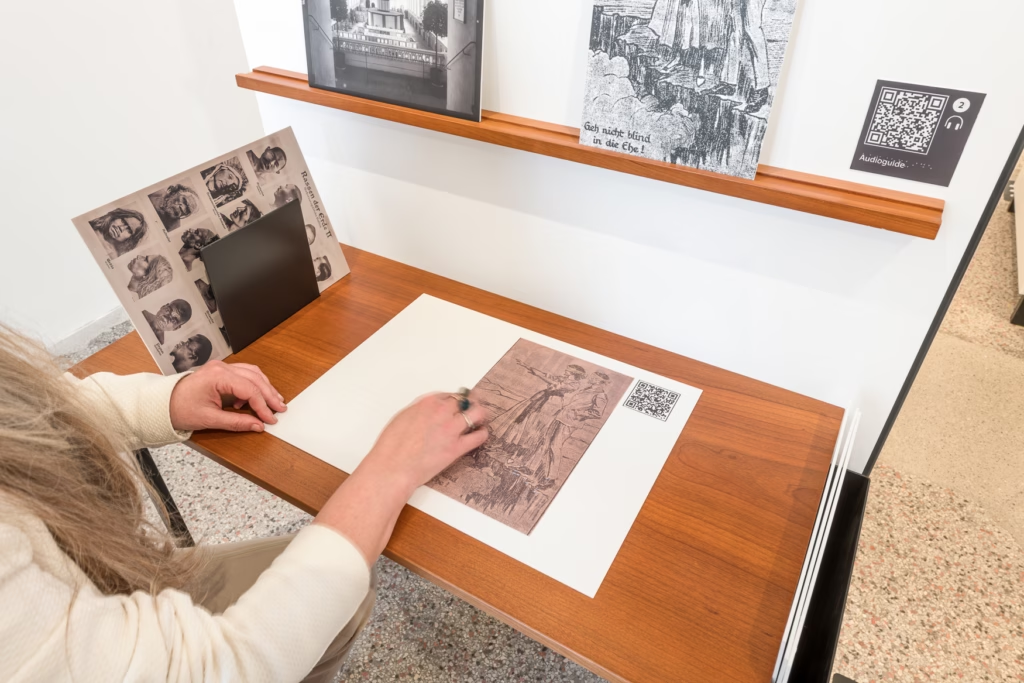
For blind and visually impaired people, a continuous tactile floor guidance system will be implemented from the parking lot to all areas of the exhibition. The elements used only temporarily for the exhibition can be removed without leaving any residue and reused. Orientation will be further supported by audio directions via an audio guide, accessible via QR code on personal devices. Selected exhibits will be presented as tactile objects or reliefs; in addition, existing tactile originals will be specifically integrated into the presentation and provided with Braille labels. The same applies to selected information stations.
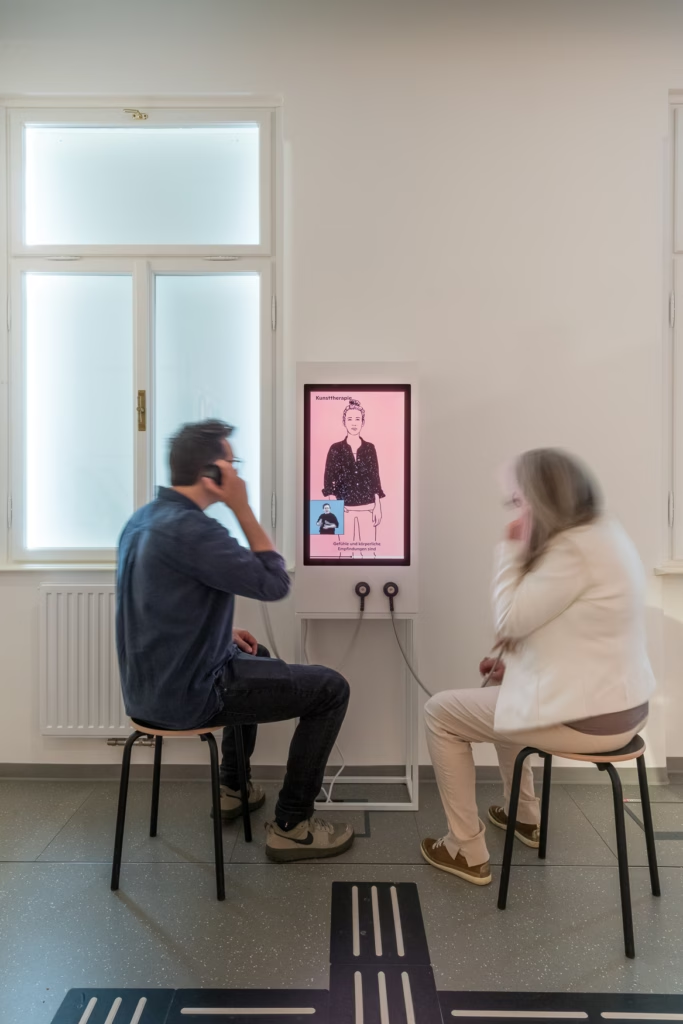
Videos are fully subtitled for people with hearing impairments and deafness. Listening stations are equipped with induction loops; all content is also available as text via QR codes, allowing for individual technical solutions. Listening stations are also made available in the form of transcripts. Videos in Austrian Sign Language are embedded in the welcome video and selected interview videos.
For people with limited mobility, there are generally no structural barriers; ramps and elevators are available. While not all, many pieces of furniture in the exhibition design are wheelchair accessible or sufficiently accessible.
For visitors with cognitive impairments or reading difficulties, chapter and subchapter texts are consistently available in simple language and support independent orientation within the exhibition narrative.
Inclusive exhibition concept – House 18
In Building 18, a tactile floor information system guides visitors directly to both exhibition rooms. Additionally, each chapter offers accessible information panels that can be dispensed from a dispenser. The dispensers contain:
• The chapter text and the key object in simple language
• An overview of all object texts in a chapter, including illustrations
The latter is an essential service for wheelchair users, as some of the objects and signs on site are not physically accessible.
• Tactile panels: At eight of the fourteen stations, the information is supplemented by tactile panels for selected exhibits. These are either designed as reliefs or offer in-depth information in accessible text format via QR codes.
In addition, the chapter text at each station can be accessed via a QR code and read using a screen reader.